
Stavros Charalambides
Short biography
Stavros Charalambides is a psychologist, relational psychoanalyst, training and supervising group psychotherapist, author, playwright and theatrical producer. His clinical, professional development and theoretical work extends from individual therapy and therapy with couples and siblings to small, median and large groups, organisations and institutional systems.
In 2016 he founded the Institute for Relational and Group Psychotherapy (ISOP) in Greece, where he directs four specialised professional development programmes. He teaches and supervises in the programme in Relational Psychotherapy/Psychoanalysis and in the programme in Group Psychotherapy according to Irvin Yalom and the Relational Dynamics of the Group. He is the only European certified group psychotherapist and group psychotherapy supervisor of the Yalom Institute (USA), and holds a postgraduate specialisation in Interpersonal Psychoanalysis from the William Alanson White Institute (USA).
He is Associate Editor of Routledge’s New International Library of Group Analysis. He served as an elected member of the Board of Directors of the International Association for Relational Psychoanalysis and Psychotherapy (IARPP) from 2018 to 2026 and, since February 2024, has served on the Board of Directors of the American Group Psychotherapy Association (AGPA). With Gila Ofer, he co-chairs the IARPP Special Interest Group on Couples, Families and Groups. He also serves on the committee of the Organisational Consultancy Section (OCS) of the International Association for Group Psychotherapy and Group Processes (IAGP). He is a clinical member of AGPA, the Eastern Group Psychotherapy Society (EGPS) in New York and the Group Analytic Society International (GASi).
His clinical and theoretical interests centre on parallel individual and group therapy, sibling dynamics, envy, mourning, hate and fury in transference and countertransference. He studies group processes within and between organisations, linking the analytic dyad with the wider multicultural social field. He also convenes large groups at national and international level.
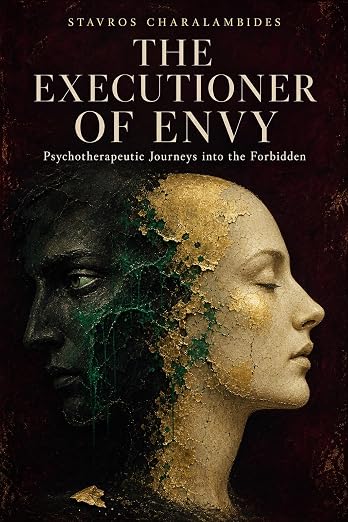
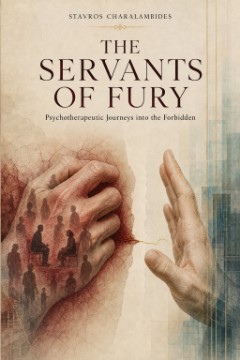
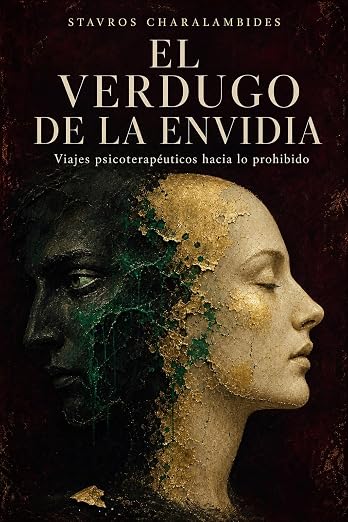
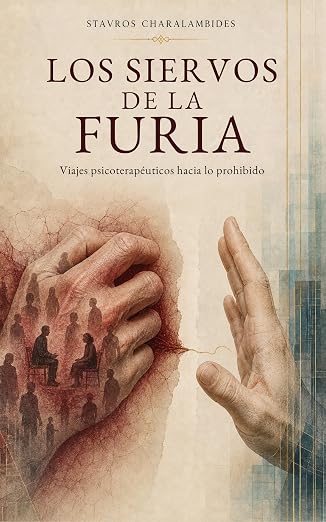
His first single-authored book, Ο δήμιος του φθόνου, was published by Disigma in 2022. In 2026 it was followed by the expanded English and Spanish editions, The Executioner of Envy: Psychotherapeutic Journeys into the Forbidden and El verdugo de la envidia, in his own translation. His second book, Τα δουλικά του μένους, was published by Disigma in March 2025; its expanded English and Spanish editions, The Servants of Fury and Los siervos de la furia, also in his own translation, were published in October 2026.
He has edited three Greek collected volumes on relational psychoanalysis and group dynamics: the first in July 2023, the second in September 2024 and the third in August 2025, and is preparing a fourth. His third single-authored book, Θεσμικός Αναλφαβητισμός (Institutional Illiteracy), was published by Disigma in October 2026. His fourth, Το Όνειρο πέρα από τον Ονειρευόμενο: Σχεσιακή Ψυχανάλυση και Ομαδική Ψυχοθεραπεία (The Dream beyond the Dreamer: Relational Psychoanalysis and Group Psychotherapy), is expected in January 2027.
Contact: catinstitutedirector@gmail.com
Selected publications
Charalambides, S. (in press). Group-as-whole effects on Greek cofacilitators in international online large groups on antisemitism. In L. Warhaftig-Aran & M. Mahler (Eds.), Psychoanalytic and group analytic reflections on war, trauma and resilience: The courage to remain human after October 7. Routledge. https://doi.org/10.4324/9781003710868-14
Charalambides, S. (2026a). The executioner of envy: Psychotherapeutic journeys into the forbidden (S. Charalambides, Trans.; expanded English ed.). https://www.amazon.com/dp/B0HDHDVCKQ (Original work published 2022)
Charalambides, S. (2026b). “The group turn” in psychoanalysis: A proposal for including group work in psychoanalytic training. Psychoanalytic Perspectives, 23(1), 4–22. https://doi.org/10.1080/1551806X.2025.2588481
Charalambides, S. (2026c). Relationality as institutional ethic: Bridging psychoanalysis, group psychotherapy, therapeutic communities, and complexity theory through the group turn. FORUM for Group Psychotherapies and Processes, 14. https://doi.org/10.56217/forum.vol14.94
Charalambides, S. (2025). Cassandra at the gates: Institutional literacy, group dynamics, and the social unconscious in contemporary psychoanalysis. Group, 49(1), 13–24. https://doi.org/10.1353/grp.2025.a978058
Charalambides, S. (2024). Relational psychoanalytic sessions as large group therapy with two representatives: Theoretical and technical issues of the “group turn” in relational psychoanalytic thinking. Psychoanalytic Perspectives, 21(1), 52–70. https://doi.org/10.1080/1551806X.2023.2284065
Ofer, G., Levin, U., & Charalambides, S. (2023). Online large groups in times of social turmoil: Helping individuals and communities to work through pandemics and wars. In The virtual group therapy circle (pp. 135–146). Routledge.
Supervision I receive for individual cases
For individual-intervention cases I am supervised by Dr. Spyros Orfanos, former President of the International Association for Relational Psychoanalysis & Psychotherapy (IARPP) and Clinic Director, New York University Postdoctoral Program in Psychotherapy and Psychoanalysis, within an international collaboration developed since September 2011, and by Dr. Darlene Ehrenberg (since September 2016), the principal theorist of the “Interpersonal tendency” within the Relational Psychoanalysis movement.
Supervision I receive for group psychotherapy
I have been supervised in group therapy by the Yalom Institute, USA, since 2008, within an international collaboration developed with Irvin Yalom’s personal biographer and Director of the Yalom Institute, Dr. Ruthellen Josselson.
Personal psychotherapy
- My individual psychoanalytic psychotherapy, twice a week, was completed (May 2012 – May 2022) with psychiatrist and psychoanalyst Grigoris Maniadakis, Full Member of the Hellenic Society of Psychoanalytic Psychotherapy.
- Group analysis once a week with psychiatrist and group analyst Kostas Morogiannis, Full Member of the Hellenic Network of Group Analysts, from November 2017 to September 2024.
- Participation in an International Online Leaderless Large Group with members of AGPA, GASI, AKRI and the Institute for Relational and Group Psychotherapy, since June 2020.
- Participation in an International Online Leaderless Large Group with Clinic Directors on issues of Direction and Leadership, since October 2021.
How I understand psychotherapy
I consider psychotherapy to be a co-creation between therapist and patient(s), in which the participants walk together with the aim of discovering a new world that resides within the person and is expressed interpersonally, in the dyad and in the group. I am a fellow traveller on this journey, which will have difficult and pleasant moments. I prefer (without this being binding) to work therapeutically with the same person at both the individual and the group level.
The framework I apply
I work psychoanalytically (at least 2 sessions a week), psychoanalytic-psychotherapeutically (at least 1 session a week) or psychodynamically (at least 1 session every 2 weeks). When needed, I draw integratively on knowledge from the 4 models in which I have specialised. I practise individual and group psychotherapy as well as couples therapy. I also supervise mental health professionals in individual and group psychotherapy, and I provide institutional supervision for organisations and for psychotherapeutic and psychoanalytic centres. I have been working as a psychologist–psychotherapist since 2003. My fee per session is €110–120 (depending on frequency), while group psychotherapy costs €190 per month. In the case of parallel therapy (individual and dyadic, individual and group), a discounted package is arranged according to the frequency of sessions.
I love the Human Being and the psychotherapeutic quest, and that is why I commit myself and seek a corresponding commitment within the psychotherapeutic framework. I perceive each person, dyad and group in their uniqueness.
Contact details
- Phone: +30 693 230 5183, +30 210 698 1289
- E-mail: catinstitutedirector@gmail.com
Books
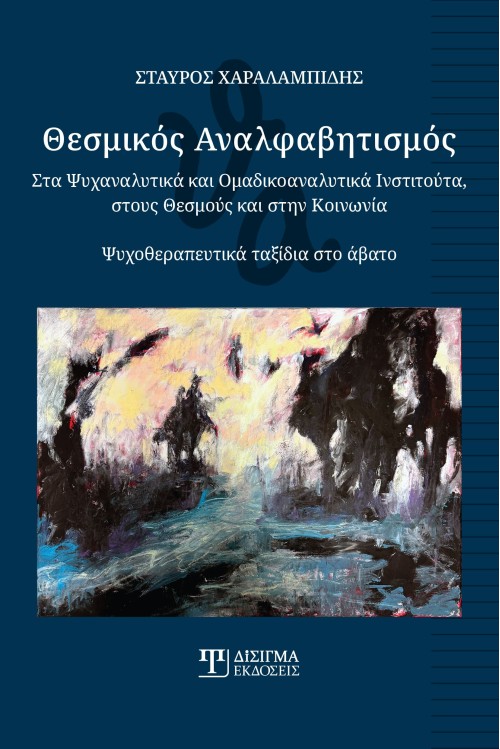
Θεσμικός Αναλφαβητισμός
Greek
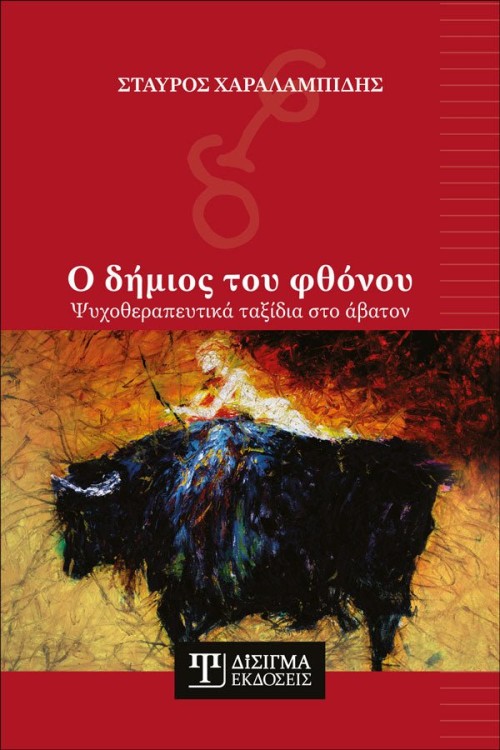
Ο δήμιος του φθόνου
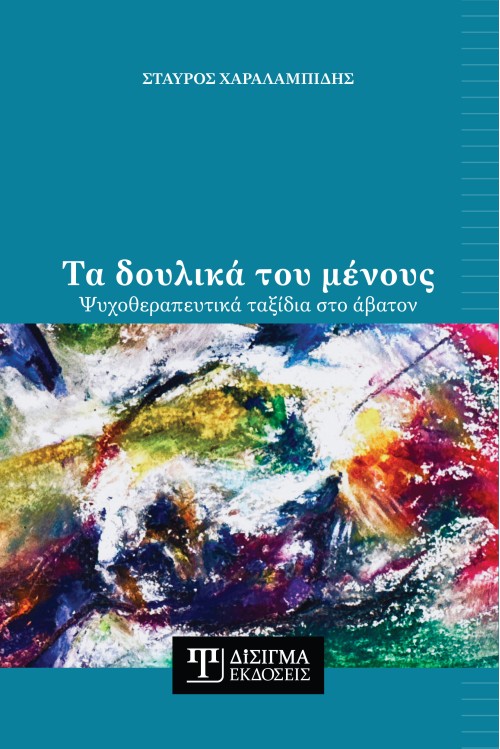
Τα δουλικά του μένους
English